Many people love the thrill of spicy peppers but feel intimidated by their heat. I get it. The fear of an overwhelming burn can keep you from experiencing the incredible flavors they offer.
Home cooks and food enthusiasts are often curious about chili peppers but lack the knowledge to choose, handle, and cook with them. This article will guide you through that confusion and into a world of lively taste.
I’ve spent years exploring global cuisines and diving deep into ingredient details. I’ve turned my kitchen into a lab, experimenting with different peppers to discover their unique aromatic profiles and heat levels. Each pepper has a story, and when you learn them, your dishes transform in mouthwatering ways.
You can open up the fiery flavors of spicy peppers. I promise that by the end of this article, you’ll feel empowered to embrace the heat and add a whole new dimension to your meals.
The journey to confidence in cooking with chili peppers starts here. Let’s dive into the world of heat and flavor.
The Science of Spice: Igniting Heat in Peppers
Ever felt like your tongue’s on fire after biting into a chili pepper? That fiery sensation is all thanks to capsaicin. It’s not just heat you’re feeling; it’s a full-on interaction with your pain receptors.
Imagine your mouth screaming, “Help!” as capsaicin binds to the TRPV1 receptors, tricking your brain into thinking you’ve tasted something scorching.
We measure this “burn” using the Scoville Heat Unit (SHU) scale. Once upon a time, it relied on human taste testers (seriously), but now we use high-performance liquid chromatography (HPLC) for more exact results. A jalapeño might clock in around 2,500 to 8,000 SHU, while a ghost pepper can reach over a million.
That’s like comparing a candle to a blowtorch.
Why are peppers spicy in the first place? Evolution’s way of saying “stay away.” Mammals learn quickly (ouch), but birds? They eat them with no problem, spreading seeds far and wide.
It’s a complex response, this “burn,” not just a rise in temperature. It’s like tasting a hot summer day with a thunderstorm brewing. Next time your mouth’s ablaze, savor the sensation.
It’s nature’s chemistry at its most exciting.
A Flavorful Journey: Exploring Spicy Peppers
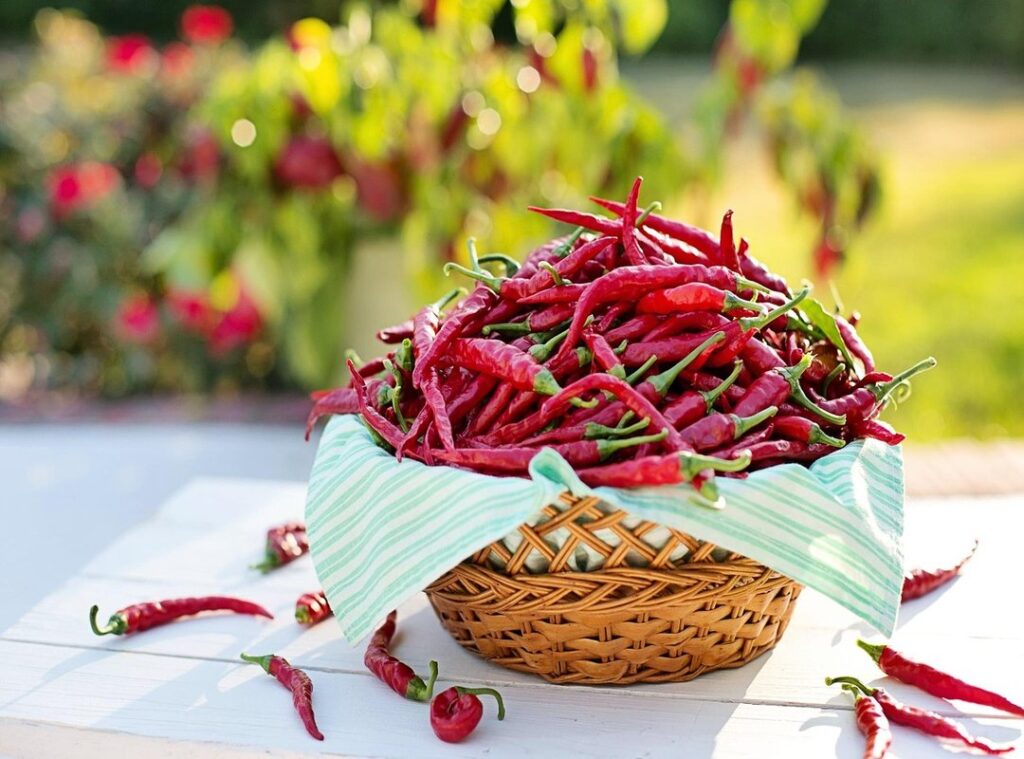
Chili peppers are an adventure for the taste buds. Whether you’re a mild fan or a heat seeker, they’re packed with unique flavors. Let’s break them down by heat level.
Mild peppers are where things start. Take the Poblano. It’s earthy and rich, making it perfect for stuffing.
Then there’s the Anaheim. Tangy and slightly sweet, it’s excellent roasted. These peppers add just a hint of warmth without overwhelming your dish.
Now, onto medium heat. Jalapeños are bright and grassy, versatile enough for salsas or just eating raw. Serrano peppers offer a cleaner, sharper heat.
They’re fantastic fresh. This is where balance comes in (enough) kick to make you notice but not enough to sweat.
Feeling brave? The hot category features Habaneros and Scotch Bonnets. Habaneros are fruity and floral, with intense tropical notes that dance on your tongue.
Scotch Bonnets deliver a similar tropical punch, often a touch hotter. These peppers are for those who crave a challenge.
And then, for the truly fearless, there’s the super hot. Ghost Peppers have a smoky, lingering inferno that doesn’t quit. Carolina Reapers are fruity and extreme, for the daring only.
Use these with care (or gloves).
Each of these chili peppers brings its own aroma and texture, enhancing various cuisines around the globe. And while we’re talking about bold flavors, ever wondered if saffron worth splurge? It’s worth exploring how these spices can transform your meals.
Taming the Flame: Spice Up Your Cooking Safely
Handling chili peppers is a bit like playing with fire (literally). You need to be careful. Always wear gloves when cutting them.
Seriously. Touching your eyes afterward is a rookie mistake you don’t want to make. Trust me, that sting is unforgettable.
Now, let’s talk heat control. You know that the seeds and inner white membrane, the placenta, pack the punch, right? Remove them to tone things down.
Keep them in if you’re feeling adventurous. It’s your call. Roasting peppers can also mellow their intensity and bring out a smoky depth.
For those who like to sauté, infusing oils with peppers adds a new dimension to your dishes. Imagine the aroma of sizzling peppers in a pan. Heaven.
And tossing them into sauces or stews? Yes, please. They blend so well, creating layers of flavor.
When it comes to pairing, think outside the box. Jalapeños with lime and cilantro make a refreshing combo. Habaneros with tropical fruits?
A match made in flavor heaven. Poblanos with cheese and corn? Can’t go wrong there.
Experimentation is key. Fresh, dried, smoked, or pickled peppers each offer a different taste. Explore various chili pepper types to find your favorite.
Pro tip: Always have some milk or yogurt on hand. Cool that heat if things get too fiery. But hey, that’s part of the fun, right? Dive into the world of chili peppers and spice up your culinary adventures!
Cooling Down: How to Tame the Heat
Ever bitten into chili peppers that turned your mouth into a fiery pit? Water’s the first instinct, but here’s the kicker: it’s useless. Capsaicin, the compound behind the burn, is oil-soluble, not water-soluble.

So water just spreads it around more. Bummer, right?
Dairy’s your hero here. Milk, yogurt, and sour cream have casein, which binds to capsaicin and helps wash it away. Think of it like dish soap for spicy oils.
Even a sweet drink can save your taste buds in a pinch.
Can’t handle the dairy? No worries. The fat in peanut butter or the sugar in honey tackle the heat too.
Need a pro tip? Keep lemon or lime juice handy. Their acid can neutralize capsaicin fast.
A slice of bread or some rice can soak up the heat too. It’s like an edible fire extinguisher.
And if you’re diving into new, spicier dishes, stock up on these cooling agents. Trust me, they’ll save the day. While you’re at it, explore the turmeric golden ingredient for an extra layer of flavor.
Beyond the Burn: Peppers and Their Unexpected Perks
Chili peppers aren’t just about the heat. They’re like little packets of magic, boosting your metabolism and kicking up your antioxidant intake. Who’d think capsaicin could do that?
Now, let’s get creative. Ever tried spicy chocolate desserts or a fruit salsa with a fiery twist? You should.
Peppers add more than spice; they bring lively colors and complex aromas that scream culinary creativity.
Why stop at hot sauce? Experiment with different varieties. Make marinades, rubs, or infused oils that make your dishes sing.
Peppers are your kitchen’s secret weapon.
Spice Up Your Kitchen Confidence
You’ve conquered the confusion around chili peppers. That initial fear is gone. You now get the heat levels and how to handle them safely.
I shared takeaways that set the stage for your culinary adventures.
Now it’s your turn. Grab that pepper you’ve been eyeing. Try a new spicy recipe that excites you.
Maybe even grow your own.
Don’t keep this knowledge to yourself. Share your spicy successes with friends or on social media. Your journey doesn’t end here.
It’s just the beginning.
Dive deeper into the flavorful world of global cuisine. You have the tools to explore and enjoy. So, what are you waiting for?
Get cooking!
 Head of Culinary Innovation & Trend Analysis